
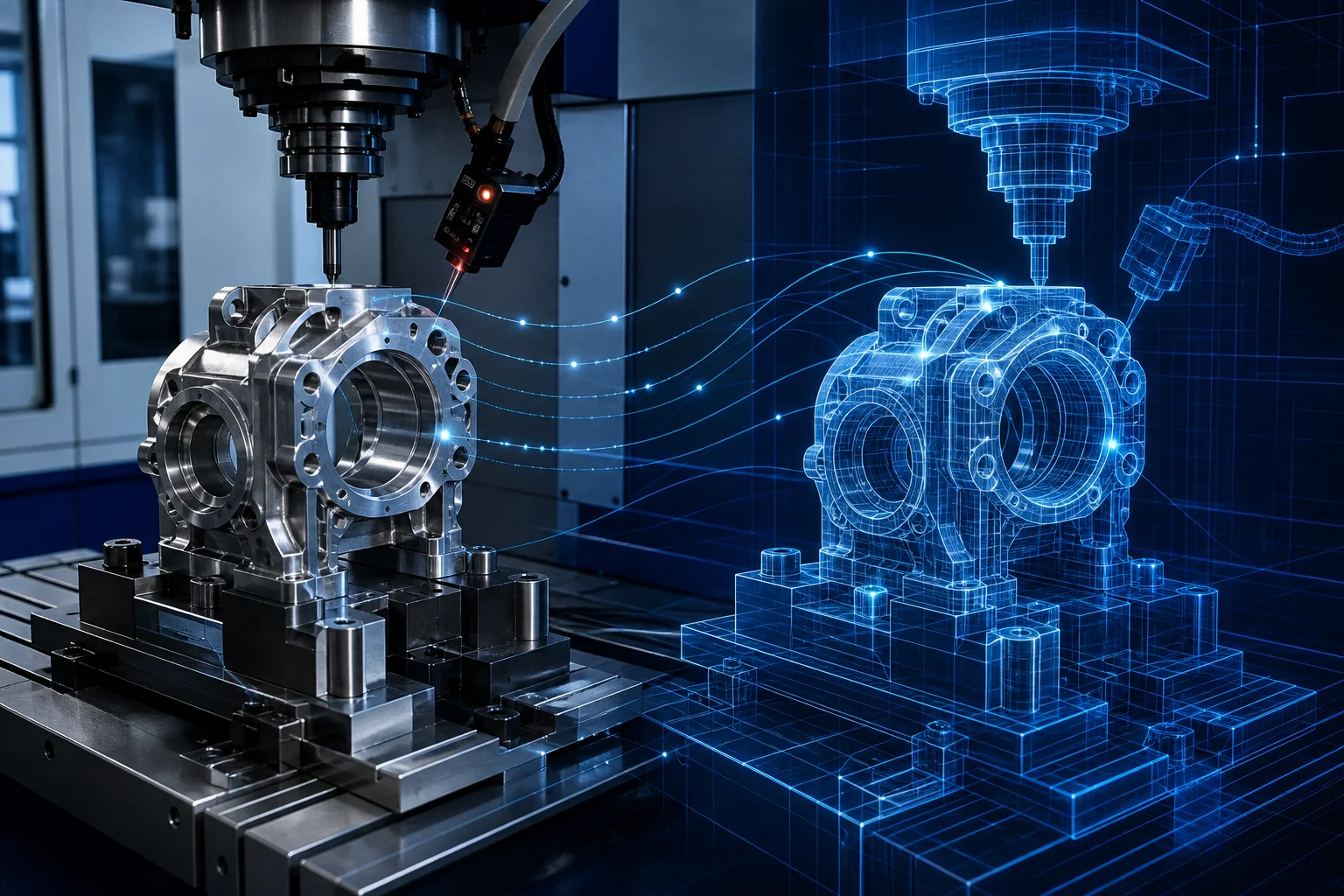
Separate a model, a digital shadow and a digital twin
A static 3D model mainly describes structure. A one-way representation of real equipment state is often called a digital shadow. A useful twin must also answer what state the object is in, what can be analyzed or predicted and how the result supports an operating action. Vendors use the terms differently, so a project should state its engineering test.
Models, animation and live charts can be part of the interface. If data is not tied to a specific asset, order, operation and time—or cannot enter maintenance, scheduling or quality work—the presentation has limited sustained value.
ISO 23247 addresses architecture
The ISO 23247 series provides a framework for manufacturing digital twins. Part 1 covers overview and principles, Part 2 the reference architecture, with later parts addressing digital representation and information exchange. It does not prescribe one software product; it helps define the physical object, observable elements, data sources, functional services and users.
Answering those questions before choosing a platform, database, 3D engine or model prevents an attractive visualization from becoming the entire project.
- Object: machine, part, operation, production cell or supply node.
- Data: state, parameter, event, quality, environment and history.
- Service: monitor, diagnose, predict, optimize or verify.
- Feedback: how the result reaches a person, system, plan or machine.
Start with one object, one problem and one action
A useful starting point might be downtime and tool life on one critical machine, actual time and quality variation for one part family, or changeover waiting on one line. The description must include the action—maintenance timing, tool replacement, schedule adjustment or quality review.
If the team can only say that machine data will be placed in a twin platform, the scope is still abstract. A clear object makes data trust and business usefulness testable.
A twin needs a minimum data contract
Standardize object ID, order ID, part revision, timestamp, unit, source, state and event definitions. Include data-quality status, access and retention. Without identity, the same machine can become three unrelated objects in maintenance, collection and planning systems.
Time alignment matters as well. Machine signals, program changes, tool replacement and inspection results cannot support causal investigation when their clocks disagree.
Faster data is not always better data
Protection or control may need sub-second or second-level response. Delivery and loading analysis may be useful by the minute or hour, while commercial planning can work daily or weekly. Higher sampling brings storage, network and false-alarm cost.
Let the business decision set the update rate. For data that cannot trigger a timely action, better meaning and reliability usually matter more than maximum frequency.
Validate the model and run it in shadow mode
Verification asks whether the model was implemented as designed; validation asks whether it is fit for the real operating purpose. Predictions also need an error range, operating envelope and version. Sensor drift, program changes, tooling or product mix can invalidate earlier performance.
Replay history first, then run recommendations without direct control. Engineers compare outputs with results and record errors. Consider greater automation only after failure modes and rollback are understood.
Return results to accountable workflows
An alert without an owner, due time and disposition becomes noise. Maintenance predictions must enter maintenance planning, quality risk into containment and review, and capacity prediction into scheduling. Acceptance, edits and rejection should retain reasons.
OT connectivity also requires segmentation, least privilege, safe stop and controlled vendor access. Cross-company twin data can expose process, volume and customer information, so boundaries belong in the design.
A staged example for one critical machine
Stage one connects machine state, program revision, tool history and inspection results to reconstruct events. Stage two analyzes downtime and tool life and gives engineers a report. Stage three uses validated recommendations in maintenance or scheduling.
Acceptance can measure event completeness, investigation time, recommendation accuracy and human adoption. It begins without a 3D dashboard but follows the essential sense-analyze-act-feedback loop.